Zoho ERP Implementation in India: A Practical Guide for Mumbai, Delhi NCR, Bengaluru, Hyderabad and Growing SMEs
Zoho ERP is becoming a serious conversation for Indian businesses that have outgrown spreadsheets, Tally-only operations, disconnected billing tools and department-wise applications. The opportunity is strong, but the implementation must be planned around Indian operating realities: GST workflows, branch control, inventory discipline, sales visibility, finance approvals, payroll handoffs and management reporting.
Why Indian businesses are evaluating Zoho ERP now
Companies in Mumbai, Delhi NCR, Bengaluru, Hyderabad, Pune, Chennai and other business hubs are under pressure to run leaner operations with better visibility. Finance teams want faster closing, sales teams want reliable order status, management wants clean dashboards and operations teams need inventory, procurement and delivery discipline. A modern ERP should connect these functions instead of forcing people to copy data from one system to another.
Zoho ERP should be evaluated as an operating platform, not only as another software subscription. A business should define which processes move first, which reports are critical, which users need approvals and where data quality must be protected. ANSI Technologies supports this planning through Zoho ERP implementation services and wider Zoho Solution Services.
Best-fit Indian use cases
- Trading and distribution companies with multi-warehouse inventory.
- Service companies that need projects, billing and collections control.
- Manufacturing or assembly teams needing structured operations.
- SMEs moving beyond spreadsheets, Tally-led reporting or isolated apps.
Mumbai
Focus on finance visibility, collection discipline, vendor payments, audit readiness and sales order control across branches or channel networks.
Delhi NCR
Prioritize procurement approvals, warehouse control, project delivery visibility, GST documentation and scalable user access.
Bengaluru and Hyderabad
Connect sales, support, subscription billing, delivery, analytics and automation for technology, services and growth-stage businesses.
Implementation blueprint before configuration starts
The strongest ERP projects begin with process decisions. Start by mapping lead to order, order to delivery, purchase to pay, inventory movement, invoice to collection and management reporting. Then define the first phase clearly. If every department asks for every feature on day one, the rollout becomes slow and confusing. If the first phase is too small, management may not see value. The right plan balances speed, control and adoption.
| Decision area | What to confirm | Why it matters |
|---|---|---|
| Finance and GST | Chart of accounts, taxes, invoice formats, approvals, collection follow-up and closing process. | Protects reporting trust and reduces manual correction after go-live. |
| Inventory | Item masters, units, warehouses, stock movements, batch or serial requirements and valuation expectations. | Prevents stock disputes and improves fulfilment visibility. |
| Sales and CRM | Lead ownership, quotation rules, price lists, approval limits and handoff to finance or operations. | Improves conversion tracking and reduces sales-to-delivery gaps. |
| Automation | Approvals, alerts, reminders, exception reporting and recurring workflows. | Creates measurable efficiency without over-customizing the first phase. |
How Zoho ERP connects with the wider Zoho stack
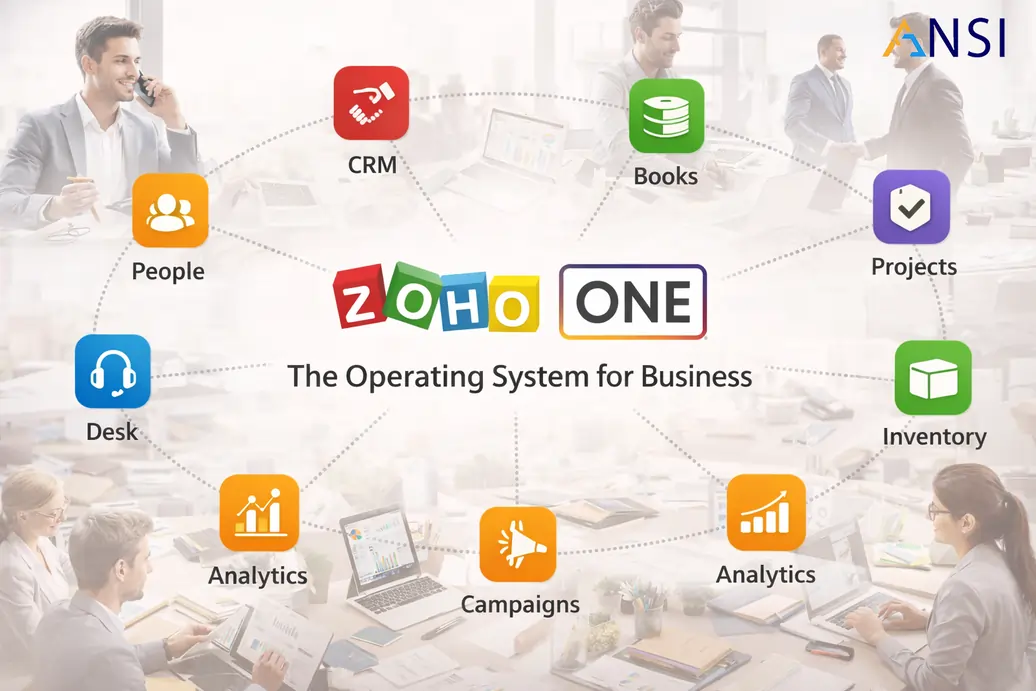
Many Indian businesses will not implement ERP in isolation. Sales may already need Zoho CRM consulting, finance teams may need Zoho Books setup, and growing teams may need project control through Zoho Projects implementation. When the process design is clear, these applications can become one operating model instead of separate tools.
The key is not to connect everything at once. Connect what improves control: sales-to-invoice, purchase-to-payment, inventory-to-finance, support-to-service billing and leadership dashboards. Where the standard Zoho setup needs extension, use Zoho customization services selectively and document every approved change.
Questions leadership should answer before signing off
- Which process creates the highest financial or operational pain today?
- Which reports must management trust every week or every month?
- Which locations, warehouses or teams must be included in phase one?
- Which workflows should be handled through configuration instead of customization?
- Who owns master data, approvals, exception handling and user adoption?
These questions reduce scope confusion and help the implementation team build a practical plan for India-focused operations.
India-specific rollout risks to control early
Indian ERP rollouts often become difficult when master data and statutory process are treated as afterthoughts. Customer GSTIN, vendor classifications, branch addresses, item HSN or SAC logic, price lists, discounts, credit terms, purchase approvals and bank reconciliation expectations should be reviewed before migration. If these are corrected after go-live, users lose confidence and finance teams spend more time fixing reports than using the system.
For Mumbai-based companies, cash-flow reporting and collection discipline may be the first priority. Delhi NCR companies often need stronger purchase control, branch coordination and management approval trails. Bengaluru and Hyderabad companies may need subscription billing, project profitability, delivery milestones and integration with customer-facing tools. The same Zoho ERP platform can support different priorities, but the first phase should reflect the business model rather than a generic ERP checklist.
Implementation governance should also define which decisions belong to finance, operations, sales, leadership and IT. For example, finance may own tax and invoice accuracy, operations may own stock movement rules, sales may own quotation discipline, and leadership may own dashboards. When ownership is visible, the rollout becomes less dependent on the implementation team and more sustainable after launch.
Recommended first-phase scope for Indian SMEs
A practical first phase should usually include customer and vendor masters, item masters, sales process, purchase process, inventory movement, invoicing, collections, tax configuration, approval controls and a small set of leadership dashboards. This gives the company a working core without forcing every advanced workflow into the initial launch.
After the first phase stabilizes, the company can extend into advanced automation, analytics, HRMS handoffs, project tracking, manufacturing, integrations and custom dashboards. This is also the right time to review user feedback and identify where Zoho automation or selective customization can improve efficiency without creating long-term maintenance risk.
For businesses evaluating multiple ERP paths, ANSI Technologies can also help compare Zoho ERP against alternatives like Odoo ERP implementation and SAP consulting, especially when the decision involves cost, implementation speed, customization, reporting and support expectations.
FAQs
Is Zoho ERP suitable for Indian SMEs?
Yes, if the company needs connected control across sales, finance, inventory, procurement, payroll handoffs, compliance and reporting. The exact fit should be confirmed through a readiness assessment.
Can Zoho ERP support multi-location Indian operations?
It can support multi-location requirements when branches, warehouses, users, approvals and reporting rules are planned before configuration.
Should we replace all existing tools immediately?
No. A phased rollout is usually safer. Start with the workflows that create the highest business impact, then expand after users and data stabilize.
How ANSI Technologies positions the engagement
The engagement should begin with a short discovery workshop, not immediate configuration. In that workshop, business leaders, finance users, sales owners and operations managers align on the process scope. ANSI Technologies then converts the discussion into a rollout plan covering applications, integrations, reporting, responsibilities, migration, testing and training.
This gives the leadership team a clear decision document before committing to implementation. It also helps branch teams in Mumbai, Delhi NCR, Bengaluru or Hyderabad understand what will change, what will remain the same and how the first phase will be supported after go-live.
Go-live preparation checklist
Before go-live, test real invoices, returns, stock transfers, payment follow-ups and approval exceptions. This protects the rollout from avoidable surprises.
Plan your Zoho ERP rollout in India with stronger control
ANSI Technologies helps Indian businesses define Zoho ERP scope, integrations, dashboards, automation and adoption before implementation begins. For a structured discussion, explore our Zoho ERP services or request a Zoho consultation.