Zoho ERP India Launch Readiness Guide for Mumbai, Delhi NCR, Bengaluru and Hyderabad
A practical guide for Indian SMEs evaluating Zoho ERP across finance, operations, supply chain, billing and reporting, with city-specific planning context for major growth markets.
Why Zoho ERP changes the India ERP conversation
Indian businesses that have outgrown accounting software often face a difficult choice: stay with disconnected tools or move into heavy ERP platforms that can be expensive and slow to implement. Zoho ERP creates a new option for companies that want better finance, operations, compliance and supply-chain control with a platform designed for the Indian business environment.
For Mumbai, Delhi NCR, Bengaluru, Hyderabad, Chennai, Pune and other Indian growth markets, the opportunity is practical. Companies can begin by cleaning customer, vendor, item, finance, procurement and billing processes before moving into deeper ERP workflows. ANSI Technologies supports this through Zoho ERP Services and related Zoho implementation support.
India city demand patterns to plan for
| Market | Likely ERP pressure | Planning focus |
|---|---|---|
| Mumbai and Navi Mumbai | Finance, trading, distribution, collections and multi-branch control. | Billing, credit control, inventory movement and finance dashboards. |
| Delhi NCR | Sales operations, procurement, service delivery and approval governance. | Quotation rules, purchase approvals, customer follow-up and reporting. |
| Bengaluru | Technology, services, SaaS, project delivery and subscription operations. | CRM integration, project tracking, invoicing and support workflows. |
| Hyderabad and Pune | Manufacturing, services, shared teams and fast-growing SMEs. | Inventory, vendor control, employee workflows and management reports. |
Where ERP must connect with sales, include Zoho CRM Services. Where finance is the starting point, include Zoho Books Services and spend-management readiness before configuration.
Zoho ERP readiness checklist for Indian SMEs
- Confirm company structure, locations, branches and reporting hierarchy.
- Clean customer, vendor, product, tax and opening-balance data.
- Document quote, order, purchase, billing, collection and approval rules.
- Identify manual spreadsheets that should be replaced first.
- Define finance, operations and management dashboards before go-live.
- Decide which workflows should remain standard and which need controlled customization.
Businesses that need special workflows can use Zoho Customization Services, but customization should follow business evidence. If the project is part of a larger transformation roadmap, leadership can use CTO as a Service for vendor governance and technology oversight.
How Zoho ERP should connect with the wider Zoho stack
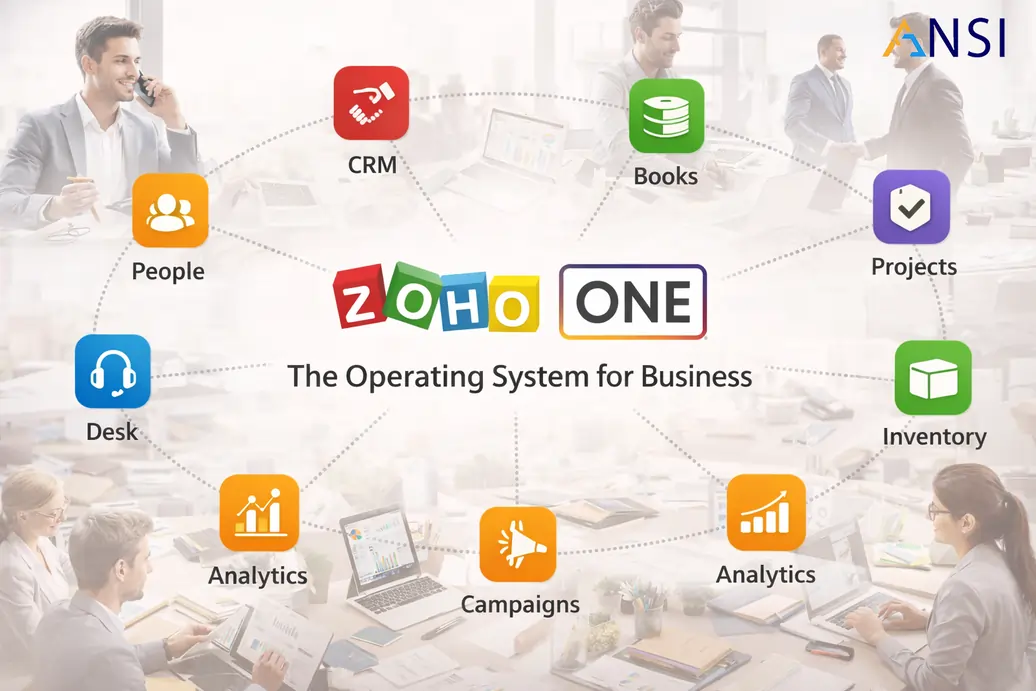
ERP should not operate alone. Sales teams need CRM visibility, finance teams need invoicing and compliance control, delivery teams need project tracking, support teams need ticket visibility and HR needs employee data. This is why many companies should look at Zoho ERP together with Zoho One Services, Zoho Projects Services, Zoho Desk Support Services and automation.
The right starting point depends on pain. A trading company may start with finance, stock and purchase control. A services firm may start with CRM, projects and invoicing. A growing manufacturer may start with inventory, procurement, finance and approvals. The goal is to create clean transactions and trusted reports, not simply to implement more software.
What Indian businesses should prepare before demo and vendor selection
Before scheduling ERP demos, Indian business leaders should prepare a short but serious readiness pack. This should include current pain points, key reports, user groups, transaction volumes, branches, tax requirements, stock locations, approval rules and major manual spreadsheets. A demo without this preparation often becomes a feature tour rather than a decision process.
For Mumbai trading firms, the pack may focus on credit control, item movement and collections. For Delhi NCR service and distribution companies, it may focus on approvals, procurement and customer follow-up. For Bengaluru technology and services firms, project billing, CRM integration and support visibility may be more important. For Hyderabad and Pune, manufacturing and operations workflows may need stronger inventory and vendor control. The ERP plan should reflect these differences instead of using one generic script for every company.
Phased implementation path for Zoho ERP India
The first phase should normally stabilize the workflows that produce management numbers. For many businesses, that means customer records, vendor records, item masters, sales orders, purchase approvals, invoicing, taxes and collections. Once these are reliable, the business can expand into deeper supply-chain, employee, spend-management, analytics or integration workflows.
A phased plan does not mean slow execution. It means each release has a clear purpose and success measure. Phase one may reduce invoice delays. Phase two may improve stock visibility. Phase three may automate approvals. Phase four may refine dashboards. This is safer than launching too many modules together and then spending months fixing user confusion and bad data.
Where the Zoho ERP rollout needs wider technology governance, ANSI Technologies can align ERP decisions with integrations, security, user access and reporting standards so the system remains reliable as the business grows.
Lead-generation intent behind Zoho ERP India content
Indian companies searching for ERP solutions are often not looking for theory. They are looking for a practical answer to a business problem: finance is not closing on time, stock is inaccurate, purchase approvals are delayed, sales teams lack visibility, customer follow-up is inconsistent or management reports are not trusted. A strong Zoho ERP plan should speak to these problems directly.
This is especially relevant in cities where SMEs are expanding quickly. Mumbai and Delhi NCR businesses may prioritize finance and distribution control. Bengaluru companies may prioritize CRM, projects and subscription operations. Hyderabad, Pune and Chennai businesses may focus on manufacturing, operations and procurement. The ERP roadmap should reflect these operating realities.
How ANSI Technologies supports Zoho ERP rollout planning
A strong Zoho ERP rollout should answer practical buyer questions: how much preparation is needed, which workflows should come first, how to migrate data, how to avoid failed ERP adoption and how to compare Zoho ERP, Zoho One, Odoo and SAP Business One.
Frequently asked questions
Is Zoho ERP relevant for Indian SMEs?
Yes. Indian SMEs that need better finance, operations, supply-chain and compliance control can evaluate Zoho ERP with a readiness-first approach.
Which Indian cities should be targeted first?
Mumbai, Delhi NCR, Bengaluru, Hyderabad, Pune and Chennai are strong markets because of trading, services, technology, manufacturing and SME growth.
Should Zoho ERP replace every existing system at once?
Not always. A phased rollout is safer when data, approvals and reporting need cleanup.
Can ANSI Technologies support Zoho ERP planning?
Yes. ANSI Technologies supports ERP discovery, implementation planning, configuration, customization, automation, dashboards and support.
Need a Zoho ERP India readiness plan?
ANSI Technologies can help Indian SMEs evaluate Zoho ERP, clean workflows and plan a controlled ERP rollout across finance, operations and reporting.
Explore Zoho Solution ServicesRequest a consultation