
Current-state assessment
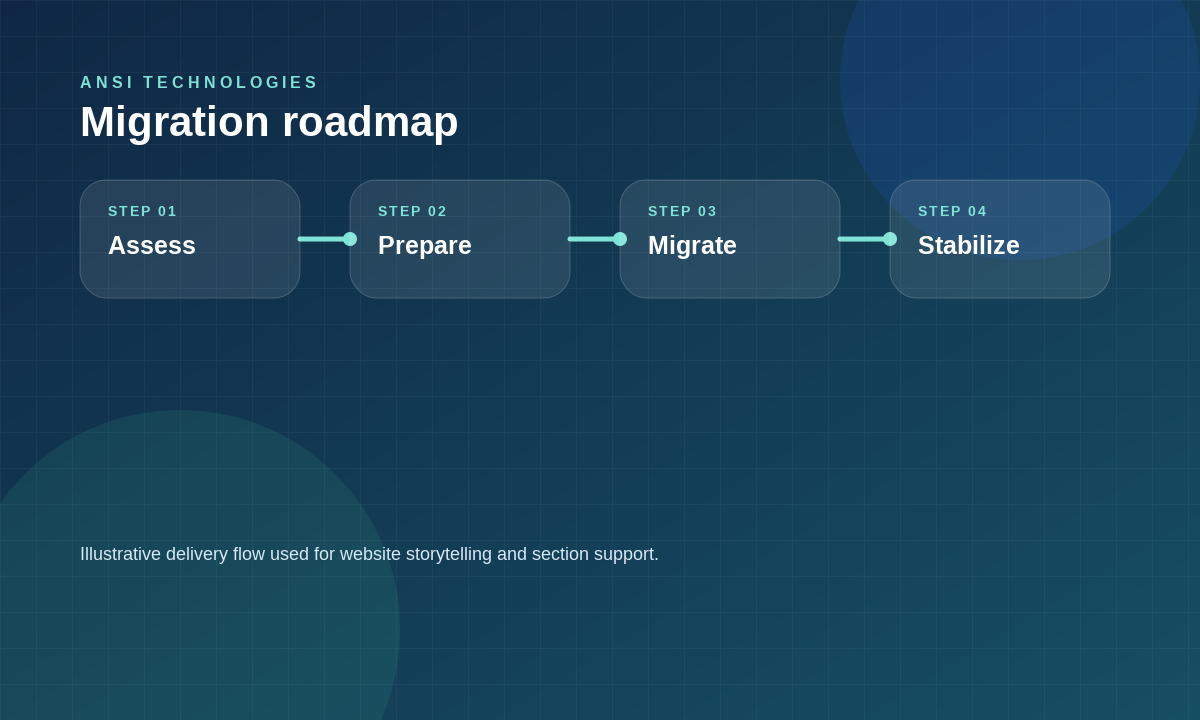
Evaluate NAV usage, customizations, reports, integrations and pain points.
Find the right technology, specialist team, or service for your business.
ERP, CRM & business platforms
Modern workplace and intelligent platforms
Explore all Microsoft services ↗Intelligent execution at scale
Resilient, secure enterprise operations
Leadership and strategic delivery
Modernize legacy NAV environments through a structured migration approach that looks beyond technology and into data, customizations, processes and user readiness.

Many NAV environments contain years of workarounds, extensions and undocumented practices. Migration should simplify where possible, not blindly reproduce everything.


The best migrations use the move to Business Central to clean up data, reduce complexity and modernize process design.
Our NAV migration scope is structured and pragmatic.
Evaluate NAV usage, customizations, reports, integrations and pain points.
Define how Business Central should support the future operating model.
Data, extensions, testing, cutover and user readiness planning.
Go-live support and stabilization for the new environment.
Every engagement should be shaped by approved business outcomes, real process conditions, available internal capacity and a controlled transition approach.
Agree scope, responsibilities, testing and acceptance before implementing changes.
Agree the expected outcomes and acceptance criteria before the engagement begins.
Clear view of current environment realities and implications.
Phased path to the target environment and operating model.
Testing, data and cutover planning guidance.
Support model and refinement priorities after transition.
Final deliverables always depend on the approved scope, environment access, supporting systems, project constraints and commercial agreement.
These questions are designed to support commercial clarity, internal alignment and buyer confidence.
Not always. They should be assessed for business relevance, technical fit and redesign options.
Often yes for NAV customers, but the right answer depends on current business complexity and strategic direction.
Yes. A phased or staged approach can be considered based on business and technical realities.
Whether you are evaluating a new platform, improving an existing environment or looking for a more disciplined support model, ANSI can help define the next commercially sensible step.